Discover Salò
Historic Salò
Art, Faith & History
A walk through Salò’s layered history: sacred art, the civic legacy of the Magnifica Patria, Roman finds and the difficult memory of the twentieth century. Start in Piazza Vittoria and let the buildings tell their stories.
Suggested walk ↓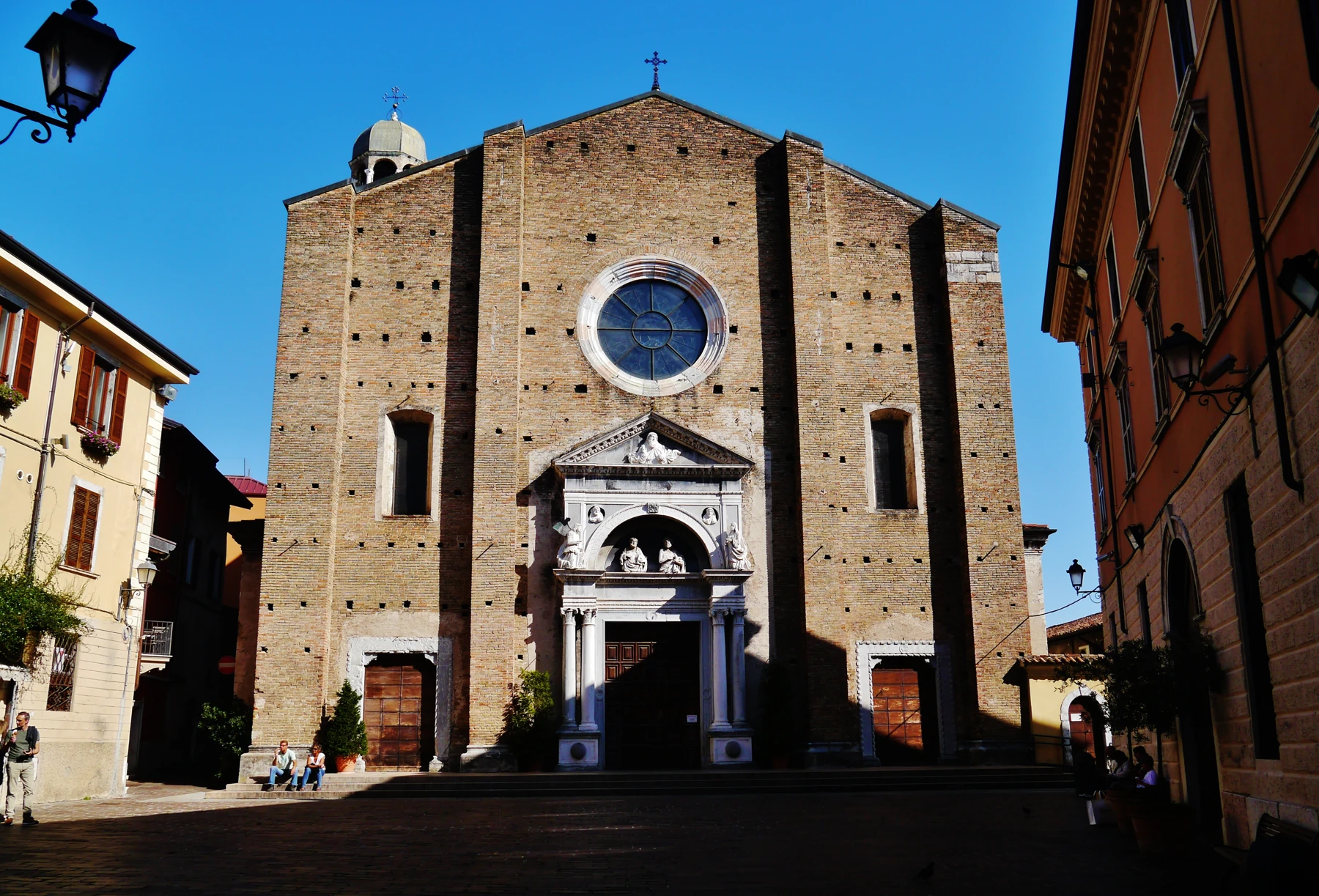

The Magnifica Patria and Venice
The lakeside civic complex brings together the Palazzo del Podestà and the Loggia della Magnifica Patria. Salò was the leading town of the Riviera community under Venetian rule from 1426 to 1797. Look for coats of arms, commemorative stones and the relationship between the portico, Via Butturini and the lake. The buildings were restored after the 1901 earthquake; today’s appearance records more than one historical phase.
Piazza Vittoria · Lungolago Zanardelli 52–55. Exterior and portico; access to civic rooms depends on official openings.
Santa Maria Annunziata: the Duomo
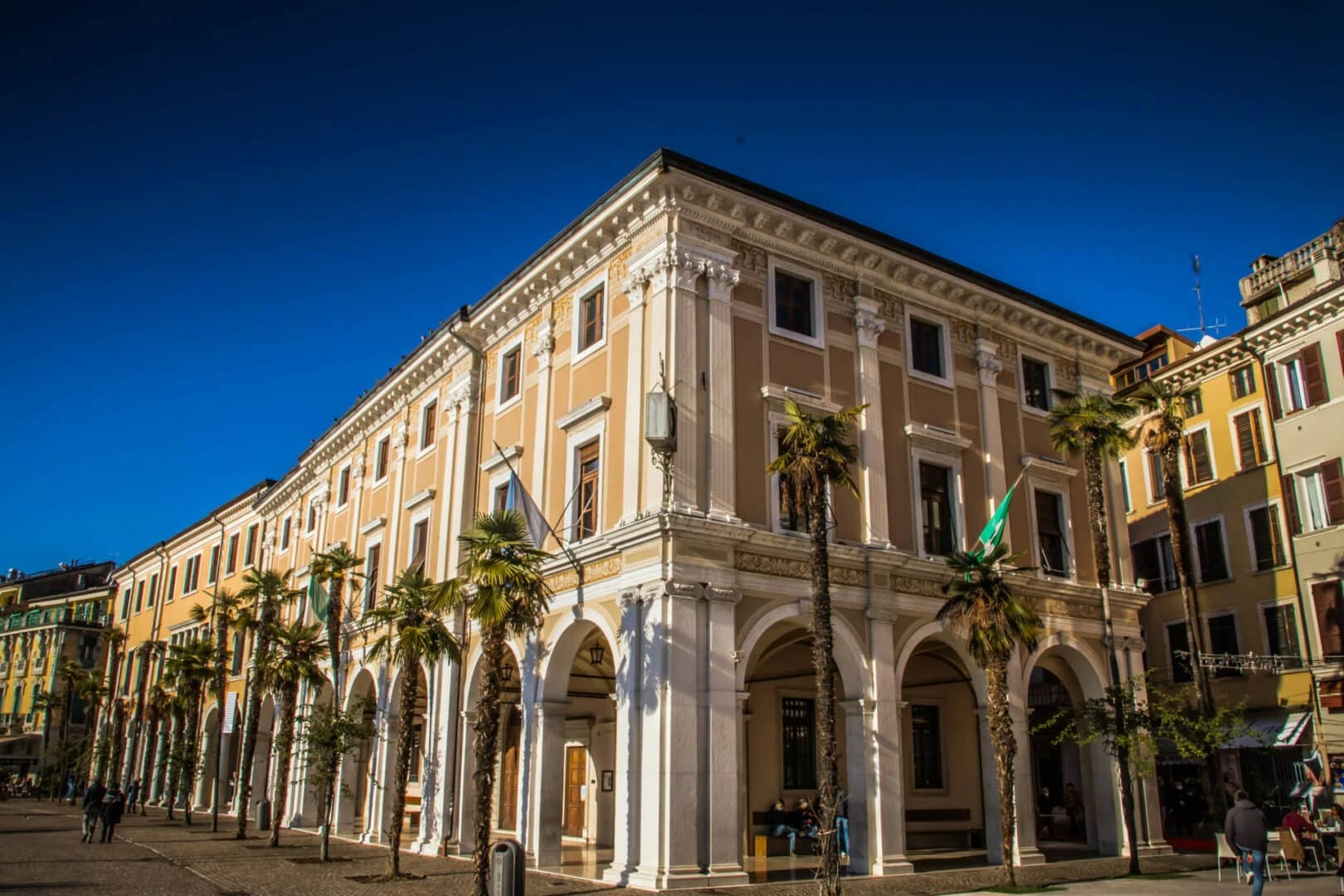
The fifteenth-century cathedral’s unfinished brick façade gives little away of the richness inside. Its three aisles lead towards the wooden crucifix by Giovanni Teutonico and the carved altarpiece by Pietro Bussolo. Paintings by Romanino, Moretto and other masters reveal Salò’s place in the artistic exchanges between Lombardy and Venice. Pause at the portal before entering; the building remains a place of worship.
Piazza Duomo · Vicolo Campanile 2. Check access with the parish and respect services.
Two more churches, two different stories
At Piazza Vittorio Emanuele II, the Visitazione church was consecrated in 1715; its later façade and richly decorated interior reflect the history of the Visitandine community. San Bernardino preserves the town’s Franciscan heritage: inaugurated in 1476, it was substantially rebuilt after damage and collapse in the early twentieth century. These are living religious places, not monuments with guaranteed tourist opening hours.
MuSa and the Santa Giustina complex
The MuSa occupies the former church and monastery of Santa Giustina. Its collections connect archaeology, civic history, science and art, offering context for what you see on the streets. The museum’s official programme is the reference for current exhibitions, admission and opening hours.
MuSa · Via Brunati 9. Consult the museum before visiting.
Roman Salò: finds you can actually see
The MuSa’s archaeological section displays material from the Roman necropolis of Lugone, used between the first and fourth centuries AD, together with inscriptions and other finds. The museum objects and their archaeological place of origin are different things: this guide does not describe Lugone as a freely visitable open-air excavation.
Read the small details
Beneath the civic portico, look at heraldic devices, inscriptions and memorial stones. In the old streets, notice portals, changes in building fabric and glimpses into courtyards. A visible doorway is not permission to enter a private property: enjoy these details from public space unless access is expressly allowed.
1943–1945: places and historical responsibility
Some ministries and offices of the Italian Social Republic were established in Salò during the Fascist regime’s final phase under German occupation. The institutions were dispersed across the Riviera and beyond: “Republic of Salò” must not imply that every centre of power was here. These buildings are read in the context of dictatorship, war, persecution and Resistance, without celebration.
Memoranea · Museo storico della Liberazione · Pro Loco Salò · storia
| Place | Historical function |
|---|---|
| Villa Simonini · Hotel Laurin · Via Landi 9 | Foreign Affairs Ministry |
| Villa Amadei · Piazza del Carmine | Popular Culture Ministry offices |
| Palazzo della Croce Rossa | Popular Culture Ministry premises |
| Collegio Civico · Santa Giustina | National Republican Guard command |
| Liceo Fermi · Lungolago | Muti and Decima MAS units |
| Scuole elementari | Stefani propaganda news agency |
Historical uses documented by the Pro Loco and memory institutions; not a list of publicly accessible interiors. Villa Feltrinelli, associated with Mussolini’s residence, is in Gargnano, not Salò.
Suggested walk
A walk from Piazza Vittoria
- Begin by the monument and lakeside civic buildings in Piazza Vittoria.
- Continue towards the Duomo along the historic centre and return through the old streets.
- Explore the Fossa area and the Visitazione church at Piazza Vittorio Emanuele II.
- Include San Bernardino if open, then head towards Via Brunati and the MuSa.
- Keep the eastern, twentieth-century historical sites as a separate extension; they are not all museum spaces.
This is a suggested sequence, not a surveyed accessible route. Check steps, surfaces, opening times and individual needs locally; allow extra time for churches and the museum.